
StoreX network
Use the managed StoreX network. Rakamix Code owns and operates the infrastructure; you connect and start using it.
Best for: Couriers, merchants, and institutions who want coverage without capital expenditure.

Live logistics infrastructure
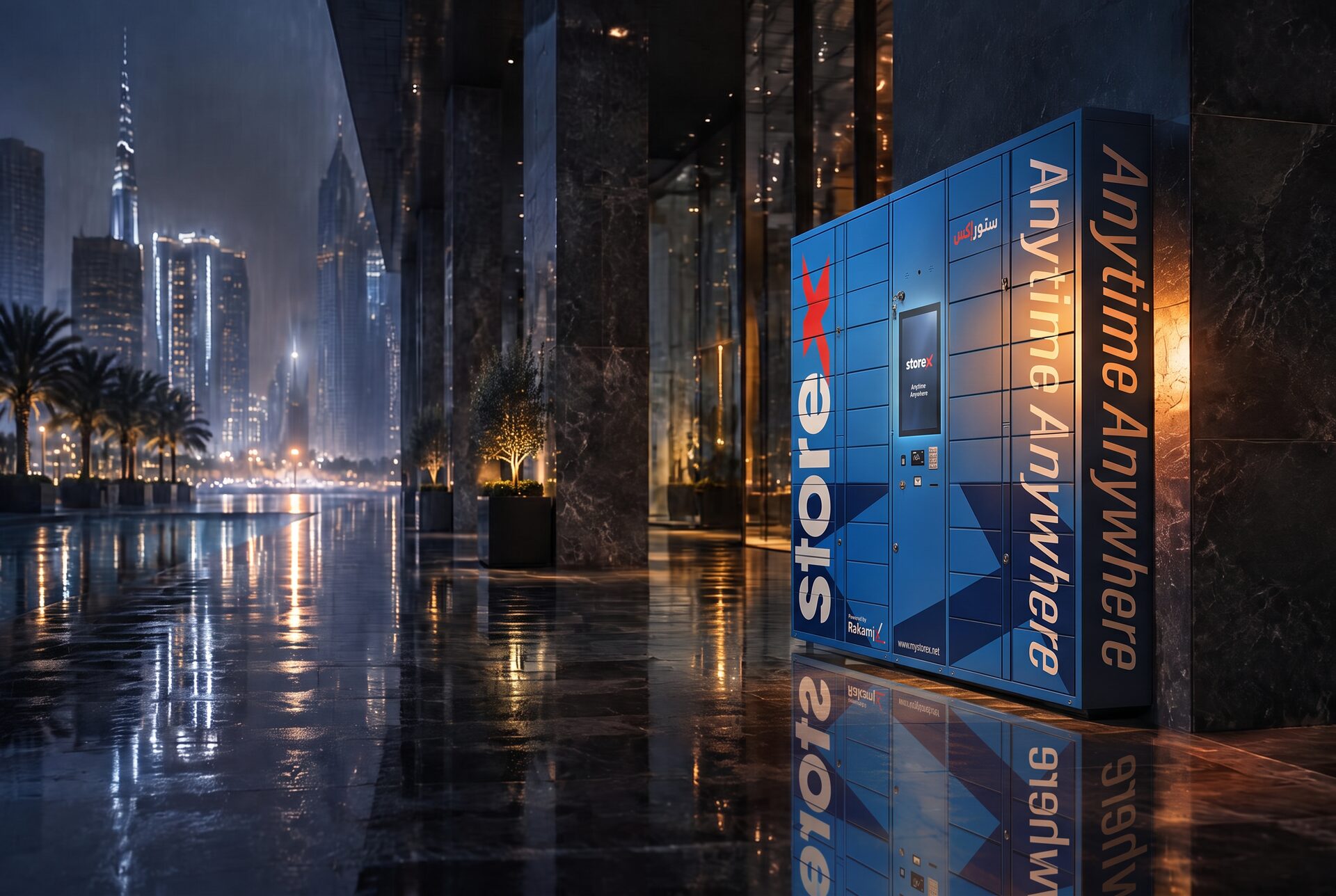
StoreX provides smart-locker and service-point infrastructure for pickup, drop-off, returns, collection, and fulfillment, available where people and logistics flows already move.
Secure compartments, monitored access, operated as infrastructure.
What it is
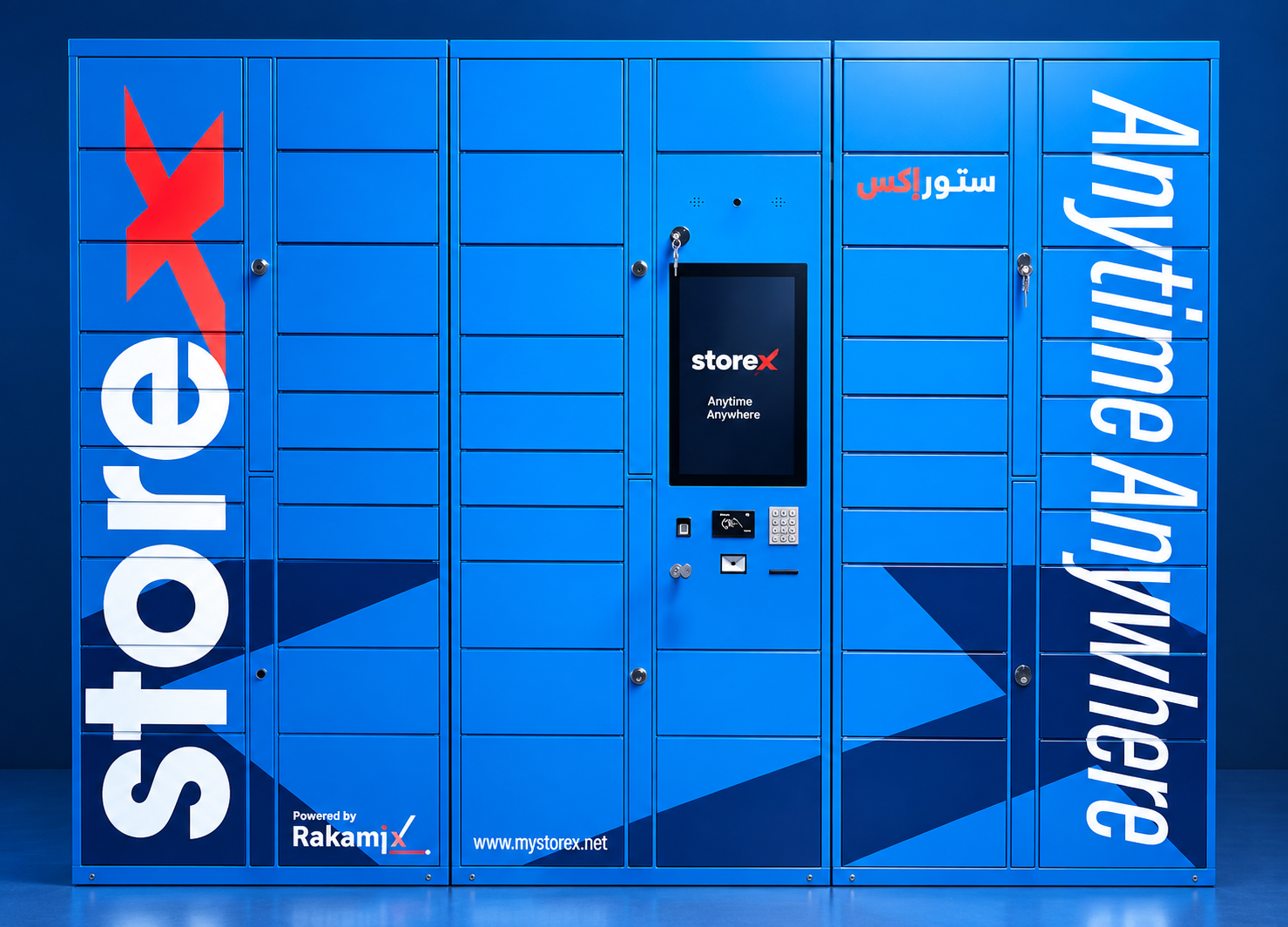
A network of monitored, always-on stations that carries the handover between two parties who never have to meet.
Modular locker stations with mixed compartment sizes, screen, scanner, and keypad.
Every door, parcel, and access event is sensed, logged, and monitored.
Installation, monitoring, servicing, and incident response are part of the product.
Couriers, merchants, and institutions connect through the same platform.
Placement
Stations are placed on flows that already exist, so collection fits into a journey people are making anyway.
Who it serves
Collect on your own schedule, with no waiting window and no missed attempt.
Drop many parcels at one monitored stop and close them in a single visit.
Offer pickup, click and collect, and returns without opening a location.
Provide a secure amenity that the front desk never has to handle.
Hand over documents and services securely outside counter hours.
Reach commuters and residents on screens placed on real urban routes.
Recipient journey
The recipient selects a StoreX point at checkout or reroutes an in-flight parcel.
The courier scans in and the platform assigns a compartment by size.
A single-use QR code and OTP are issued to the recipient.
Scan or enter the code at the station and the correct door opens.
The same station accepts returns and outbound parcels.
Courier journey
Consolidated drops for a location appear as one stop in the route.
The driver authenticates at the station with their operator credentials.
Scan each parcel, place it in the door that opens, close and confirm.
Proof of delivery and events flow back to the courier system through the API.
Architecture
Stations, compartments, locks, screens, scanners, and power.
Door state, occupancy, tamper, and environment signals from every unit.
StoreX SaaS orchestrates access, workflows, locations, and users.
APIs, webhooks, and events connecting courier and commerce systems.
Monitoring, servicing, incident response, and field operations.

Security
Every compartment opens against a credential, and every open is recorded. Operators can reconstruct who opened what, and when, long after the parcel has moved on.
QR codes and one-time passwords are issued per parcel and expire after use.
Consumers, couriers, operators, and administrators each get their own permissions.
Every open, close, and exception is sensed and logged against the parcel.
A complete, exportable history of who accessed what, when, and from where.
Deployment
Use the managed StoreX network. Rakamix Code owns and operates the infrastructure; you connect and start using it.
Best for: Couriers, merchants, and institutions who want coverage without capital expenditure.
Run your own hardware on StoreX SaaS, with your locations, your branding, and your workflows.
Best for: Operators who already own devices or want the asset on their balance sheet.
Rakamix Code designs, deploys, operates, and monitors the infrastructure on your sites under an agreed service model.
Best for: Property owners, campuses, and institutions who want the outcome, not the operation.
StoreX is designed and operated in Egypt by Rakamix Code, a logistics venture studio based in Smart Village, Giza. Stations are engineered for Egyptian operating conditions: dense residential compounds, mixed-use commercial streets, campuses, and government service points, with power, connectivity, and climate tolerance planned per site.
Deployments are planned nationally rather than tied to one district, so an operator in Greater Cairo, the Delta, Upper Egypt, or the coastal governorates works with the same hardware, the same operating platform, and the same service model. Talk to our team about coverage for your locations.
Questions
Yes. StoreX is a live venture with operating smart-locker infrastructure, and StoreX SaaS is the platform that runs it.
No. You can use the managed StoreX network, run your own hardware on StoreX SaaS, or ask us to deploy and operate the infrastructure for you.
With a single-use QR code or a one-time password issued for that specific parcel. Codes expire once used.
Yes. StoreX SaaS exposes APIs and webhooks for parcel events, access events, capacity, and location data.
Door, occupancy, and tamper signals raise an alert in the platform, and the operating team follows an incident workflow to resolve it.
Transport hubs, compounds, malls, campuses, offices, and service centers. We assess power, access, footfall, and servicing before placement.
Tell us where your parcels stall today and we will map the deployment model that fits.